
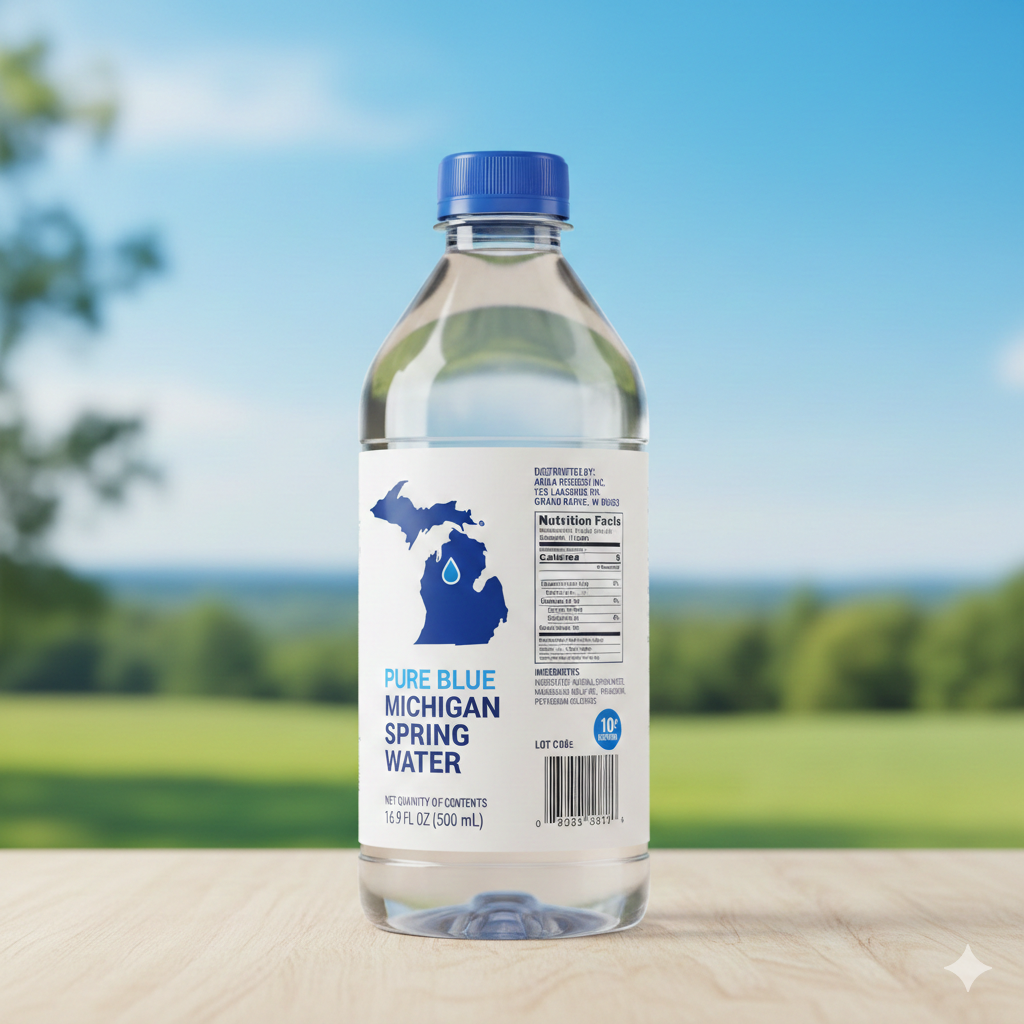
In Michigan, the sale of bottled water (in bottles or cans) is regulated through a partnership between two state departments. Essentially, the water source is regulated as a “utility” by one agency, while the final product is regulated as a “food” by another.
As of January 2026, new licensing requirements and royalty fees have gone into effect for producers.
1. Regulatory Authorities
- EGLE (Michigan Dept. of Environment, Great Lakes, and Energy): Approves the water source (wells, springs, or municipal intake) and oversees water withdrawals.
- MDARD (Michigan Dept. of Agriculture and Rural Development): Regulates the bottling plant as a food processing facility and manages product registration and labeling.
2. Key Requirements for Selling Bottled Water
To legally sell bottled water in Michigan, you must complete these three primary steps:
Step A: Source Approval (EGLE)
- In-State Sources: You must have your water source inspected and approved by EGLE before distribution.
- Large Withdrawals: If you plan to withdraw more than 200,000 gallons per day, you must obtain a specific permit and consult with local government officials.
- Out-of-State Sources: If you are selling water bottled elsewhere, you must provide proof that the source was approved by the equivalent agency in that state.
Step B: Facility Licensing & Registration (MDARD)
- Food Establishment License: Your bottling or canning facility must be licensed by MDARD as a food processing plant. This involves a plan review of your facility’s layout and equipment.
- Brand Registration: Each brand name must be registered annually with MDARD.
- Fee: $25.00 per brand, per year.
- Renewal: Registrations expire every April 30.
- New 2026 License: Under recent legislation (HB 6274), as of January 1, 2026, all persons producing bottled drinking water must be specifically licensed for that purpose, separate from a general food license.
- Identity: Must clearly state the type of water (e.g., “Spring Water,” “Distilled Water,” or “Purified Water”).
- Source: Must declare the location of the water source.
- Treatment: Any treatment processes (like Reverse Osmosis or UV) must be disclosed.
- Contact Info: Must include the name and address of the manufacturer or distributor.
- Royalties: Effective January 1, 2026, licensed bottlers must pay a royalty of $0.25 per gallon of water bottled.
- Reporting: You are required to submit quarterly reports to the state documenting the total volume of water withdrawn and bottled each month.
- Carbonated Water: If your water is carbonated (sparkling), it is subject to the Michigan Bottle Bill. You must charge a 10¢ deposit per container, and the container must have the “MI 10¢” refund marking.
- Non-Carbonated Water: Pure, non-carbonated water is currently exempt from the 10¢ deposit requirement. You can sell these in bottles or cans without a deposit, but they are still prohibited from being disposed of in Michigan landfills.